Category: Skills Development

  • 9 Stages of Enterprise Creation: Stage 1 – Discovery

    9 Stages of Enterprise Creation: Stage 1 – Discovery

    Introduction to Stage 1 – Discovery

    This stage is centred around the focal competency of Opportunity recognition, creation and evaluation QAA(2012) and Bacigalupo, et al., (2016). These are the processes by which entrepreneur identifies and evaluates potential new business opportunities. An opportunity by definition is a favorable set of circumstances which creates a need for a new product, business, or service (Barringer & Ireland, 2010; Ardichvili 2003; Shane & Venkataraman, 2007). Opportunity recognition therefore is the process through which the entrepreneur perceives, develops and formalises a prospective idea for a new venture. The evaluation of the opportunity takes research, exploration, and an understanding of current needs, demands, and trends from consumers and others. The process of researching and surveying allows the product or service idea to develop, so that it can be modeled.

    Discovery Stage Compendium

    The first stage in the entrepreneurial journey, as delineated in the provided academic excerpt, is the Discovery phase, which is fundamental to unveiling a viable business idea. Central to this phase is the focal competency of “Opportunity recognition, creation, and evaluation” (QAA, 2012; Bacigalupo et al., 2016). This process entails the entrepreneur identifying, scrutinizing, and formulating a prospective notion for a new venture. Various scholars have asserted that an opportunity, by definition, is a set of favorable circumstances that catalyzes the necessity for a new product, business, or service (Barringer & Ireland, 2010; Ardichvili, 2003; Shane & Venkataraman, 2007).

    The process of opportunity recognition is multifaceted and necessitates a keen understanding of market dynamics, consumer needs, and emerging trends. Entrepreneurs engage in rigorous research, exploration, and analysis to refine and substantiate their initial ideas. This phase is crucial as it lays the foundation for the subsequent entrepreneurial journey.

    Examples of successful opportunity recognition and the development of viable business ideas can be observed globally. For instance, in the United States, the inception of Airbnb emerged from a recognized opportunity by its founders to provide affordable lodging alternatives during periods of significant local events. Similarly, in Asia, the launch of Grab, a ride-hailing service, came from the identified necessity for reliable and convenient transportation services in various Southeast Asian countries.

    Moreover, various methodologies and frameworks have been proposed to aid in the effective discovery of business opportunities. These include environmental scanning, SWOT analysis (Strengths, Weaknesses, Opportunities, Threats), and Design Thinking, which emphasize empathy and iterative testing to understand consumer needs and problems deeply.

    The academic discourse also alludes to the importance of evaluating the discovered opportunities to ensure they are viable and worth pursuing. This evaluation often involves assessing the market size, competition, financial feasibility, and the alignment of the opportunity with the entrepreneur’s skills and resources.

    It’s pertinent that the process of discovering and evaluating business opportunities is not rushed, as the initial idea refinement and validation can significantly impact the venture’s subsequent stages. The global entrepreneurial landscape is replete with examples that underline the centrality of a well-navigated Discovery stage, ultimately contributing to the venture’s sustainability and growth in the competitive market arena.

    In summation, the Discovery stage is a cornerstone in the entrepreneurial process, assisting entrepreneurs in unveiling and honing business ideas that are not only innovative but also resonant with market needs and consumer demands. Through rigorous opportunity recognition and evaluation, entrepreneurs set the stage for the iterative and experiential journey that characterizes the entrepreneurial endeavor.

    Entrepreneur Tips

    Navigating through the Discovery stage is crucial for entrepreneurs as it sets the groundwork for the venture. Here are five tips to aid entrepreneurs in successfully traversing this initial phase:

    1. Market Research:
      • Conduct thorough market research to understand the current market trends, consumer needs, and the competitive landscape. Utilize tools like SWOT analysis (Strengths, Weaknesses, Opportunities, Threats) to identify and evaluate potential opportunities.
    2. Network and Engage:
      • Network with other entrepreneurs, potential customers, and industry experts to gain insights and feedback on your initial ideas. Engaging with a diverse range of individuals can provide different perspectives that may help refine your business idea.
    3. Iterative Testing and Validation:
      • Employ a lean startup approach by building a Minimum Viable Product (MVP) or service to test your business idea in the real market. Gather feedback and make necessary adjustments to ensure that the idea meets the market needs.
    4. Educational Upgradation:
      • Continuously educate yourself on the industry you are venturing into. Attend workshops, seminars, and courses that can provide you with the necessary knowledge and skills to better understand and evaluate business opportunities.
    5. Maintain a Learning Mindset:
      • The Discovery stage is a learning process. Maintain a growth mindset and be open to feedback and adjustments. Learn from failures and successes alike, and be willing to pivot your business idea based on the learnings and market feedback.

    These tips advocate for a proactive, open, and iterative approach towards the Discovery stage, emphasizing the importance of market understanding, networking, validation, education, and a learning-oriented mindset to unveil and refine a viable business idea.

    Further Reading

    View the original paper here, and the blogs in this series:

    9 Stages of Enterprise Creation: Stage 1 – Discovery

    9 Stages of Enterprise Creation: Stage 2 – Modeling

    9 Stages of Enterprise Creation: Stage 3 – Startup

    9 Stages of Enterprise Creation: Stage 4 – Existence

    9 Stages of Enterprise Creation: Stage 5 – Survival

    9 Stages of Enterprise Creation: Stage 6 – Discovery

    9 Stages of Enterprise Creation: Stage 7 – Adaptation

    9 Stages of Enterprise Creation: Stage 8 – Independence

    9 Stages of Enterprise Creation: Stage 9 – Exit

  • The Entrepreneurs Map of the World: Global Venture Quest

    The Entrepreneurs Map of the World: Global Venture Quest

    Introduction

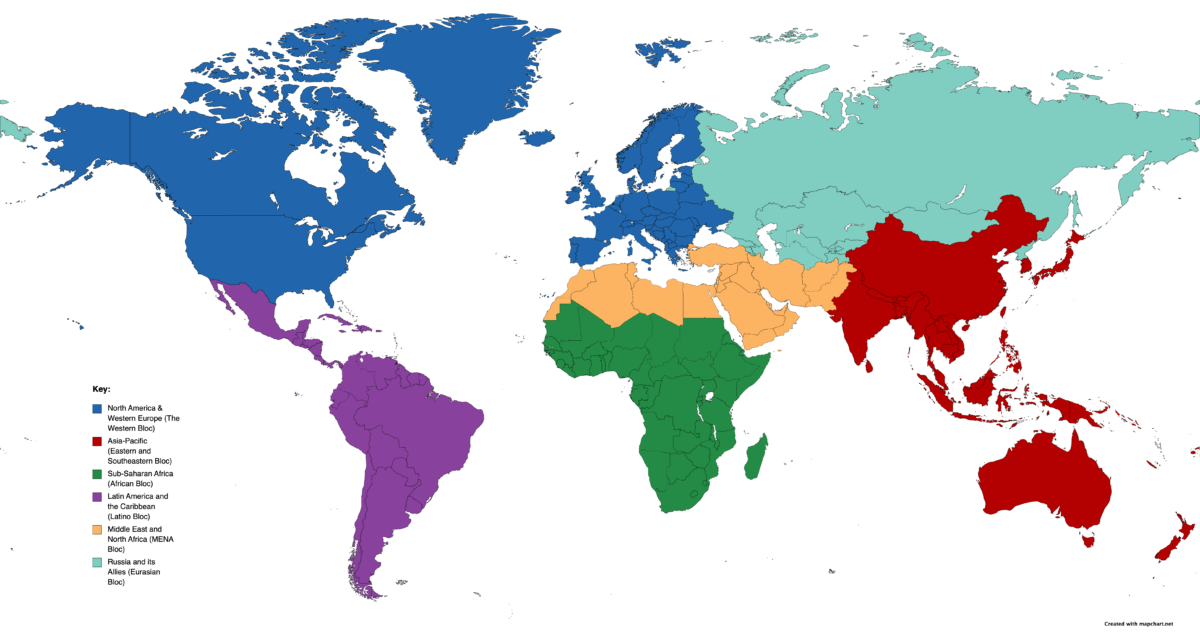
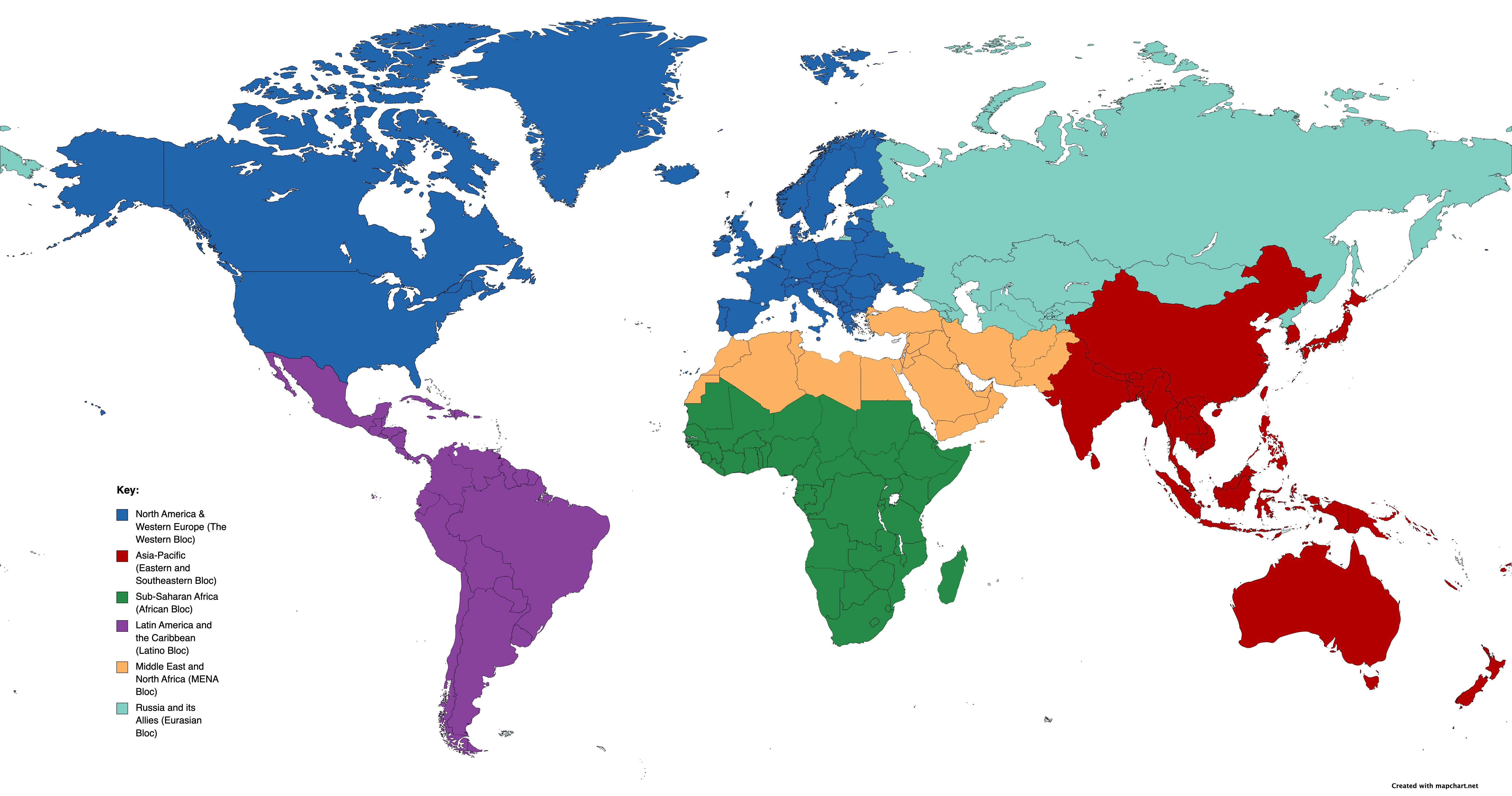
    The world is vast, diverse, and brimming with opportunities for entrepreneurs. By examining six political groupings, we can uncover unique entrepreneurial prospects tailored to each region’s strengths, culture, and needs. Let’s embark on this global journey!

    Six Political Groups: A Review

    These are broad groupings.

    1. North America & Western Europe (The Western Bloc):
    • Population: Over 800 million.
    • Land Mass: Approximately 19,123,457 km².
    • Language: Predominantly English, French, German, Spanish, and Italian.
    • Business Culture: Formal, structured, and driven by innovation. Emphasis on punctuality, clear communication, and contractual agreements.
    • Trade Opportunities:
      • Green Tech: With a strong focus on sustainability, there’s a growing demand for green technologies, renewable energy solutions, and sustainable products.
      • Digital Health: Aging populations in Europe require advanced healthcare solutions, making telemedicine and health tech startups particularly promising.
      • Locations:
        • Silicon Valley (USA) for tech startups.
        • Berlin (Germany) for its vibrant startup ecosystem.
      • Potential Customers:
        • Environmentally-conscious consumers.
        • Elderly populations seeking healthcare solutions.
    1. Russia and its Allies (Eurasian Bloc):
    • Population: Over 250 million.
    • Land Mass: Over 17 million km² (Russia alone).
    • Language: Russian and related languages.
    • Business Culture: Hierarchical with a mix of Western and Eastern influences. Personal relationships and trust are crucial.
    • Trade Opportunities:
      • Energy Resources: Russia is one of the world’s largest producers of oil and natural gas. The country has vast reserves, making the energy sector a dominant player in its exports.
      • Minerals and Metals: The Eurasian Bloc, particularly Russia, is rich in minerals like gold, diamonds, coal, and rare earth metals. Kazakhstan is a significant producer of uranium.
    1. Asia-Pacific (Eastern and Southeastern Bloc):
    • Population: Over 4 billion.
    • Land Mass: Approximately 35,514,500 km².
    • Language: Mandarin, Hindi, Japanese, Korean, Bahasa Indonesia, among others.
    • Business Culture: Diverse, with a blend of tradition and modernity. Respect for hierarchy, emphasis on relationships, and face-saving are common traits.
    • Trade Opportunities:
      • E-commerce: With the digital boom in countries like China, e-commerce platforms and solutions have immense potential.
      • Robotics: Japan’s expertise in robotics can be leveraged for sectors like healthcare, entertainment, and manufacturing.
    • Locations:
      • Shenzhen (China) for electronics and manufacturing.
      • Tokyo (Japan) for robotics and tech innovations.
    • Potential Customers:
      • Young, tech-savvy populations.
      • Industries seeking automation solutions.
    1. Middle East and North Africa (MENA Bloc):
    • Population: Over 400 million.
    • Land Mass: Approximately 15 million km².
    • Language: Primarily Arabic, with variations across countries.
    • Business Culture: Relationship-driven with a high regard for tradition. Hospitality and face-to-face meetings are valued.
    • Trade Opportunities:
      • Renewable Energy: Moving away from oil, there’s potential in solar and wind energy ventures.
      • Cultural Tourism: The ancient Silk Road and historical sites offer unique tourism opportunities.
      • Locations:
        • Dubai (UAE) for its business-friendly environment.
        • Samarkand (Uzbekistan) for tourism centered around historical sites.
      • Potential Customers:
        • Global industries seeking renewable energy solutions.
        • History buffs and travelers.
    1. Sub-Saharan Africa (African Bloc):
    • Population: Over 1 billion.
    • Land Mass: Approximately 7,769,477 km².
    • Language: A vast array, including Swahili, Hausa, Yoruba, Zulu, and English.
    • Business Culture: Diverse across countries, but generally relationship-driven with a mix of traditional and Western influences.
    • Trade Opportunities:
      • Fintech: With a significant unbanked population, mobile money and fintech solutions can thrive.
      • Eco-tourism: Africa’s rich biodiversity offers opportunities for sustainable tourism ventures.
      • Locations:
        • Nairobi (Kenya) for its growing tech hub.
        • Cape Town (South Africa) for tourism ventures.
      • Potential Customers:
        • Local populations seeking banking alternatives.
        • International tourists.
    1. Latin America and the Caribbean (Latino Bloc):
    • Population: Over 600 million.
    • Land Mass: Approximately 15,459,746 km².
    • Language: Primarily Spanish and Portuguese.
    • Business Culture: Relationship-centric with a relaxed approach to time. Family and personal connections play a significant role.
    • Trade Opportunities:
      • Agri-business: With vast arable lands, businesses can explore organic farming, coffee cultivation, and more.
      • Cultural Tourism: The rich heritage and festivals can be leveraged for tourism.
      • Locations:
        • São Paulo (Brazil) for agri-business ventures.
        • Mexico City (Mexico) for cultural enterprises.
      • Potential Customers:
        • Global consumers of agricultural products.
        • Culture enthusiasts and travelers.

    In conclusion, each political grouping presents a unique blend of culture, resources, and opportunities. Understanding the nuances of each region is crucial for businesses looking to expand globally. From the tech hubs of the Western Bloc to the vast natural resources of the African and Eurasian Blocs, the world offers a plethora of trade and investment opportunities for the discerning entrepreneur.

    Global Venture Quest – Classroom Game

    Objective: To educate university students about the six political groupings and the entrepreneurial opportunities they offer, while also teaching them the basics of starting and running a successful business.

    Setup:

    • A game board depicting a world map divided into the six political groupings. Download from here.
    • Opportunity cards specific to each region, detailing potential business ideas. See below.
    • Challenge cards that present obstacles or advantages based on real-world scenarios. See below.
    • Venture tokens representing different business resources: capital, manpower, technology, etc.
    • Player tokens to move around the board.

    How to Play:

    1. Starting Out:
      • Each player selects a token and starts at desire country.
      • Players are given a set number of venture tokens to start their entrepreneurial journey.
    2. Moving Around:
      • Players roll a dice to move around the board. Landing on a region allows them to draw an ‘Opportunity Card’ specific to that region.
      • The Opportunity Card will present a business idea related to that region’s strengths (e.g., Green Tech in Europe or Agri-tech in South Asia).
    3. Investing in Opportunities:
      • To invest in an opportunity, players spend their venture tokens. Different opportunities will require different combinations of resources.
      • Once invested, players receive a ‘Business Card’ for that opportunity, which they keep for the game’s duration.
    4. Facing Challenges:
      • As players move around the board, they may land on ‘Challenge Spaces’. Here, they draw a ‘Challenge Card’ which may present obstacles (e.g., political instability, economic downturn) or advantages (e.g., a tech boom, favorable trade policies).
      • Challenges can affect the success of their businesses, requiring them to adapt or pivot.
    5. Expanding and Collaborating:
      • Players can expand their businesses by investing in new opportunities in different regions.
      • Players can also collaborate, merging resources to tackle bigger opportunities or challenges.
    6. Winning the Game:
      • The game ends when all Opportunity Cards have been drawn.
      • Players calculate their success based on the number of businesses they’ve started, minus any challenges they couldn’t overcome.
      • The player with the most successful ventures across the different regions wins, showcasing their global entrepreneurial prowess.

    Educational Value:

    • Players learn about the unique entrepreneurial opportunities in each political grouping.
    • They understand the challenges of starting and running a business in different global contexts.
    • Collaboration and strategy are key, teaching players the value of partnerships and adaptability.

    Expansion Ideas:

    • Introduce ‘Tech Upgrade’ cards that allow businesses to adopt new technologies, reflecting the real-world importance of tech in entrepreneurship.
    • ‘Cultural Insight’ cards can provide players with knowledge about local customs and practices, emphasizing the importance of cultural understanding in global business.

    “Global Venture Quest” is not just a game but an interactive learning experience, making the complexities of global entrepreneurship accessible and engaging for university students.

    Opportunity Cards for Each region

    These “Opportunity Cards” are designed to reflect the unique strengths and potential of each region. Players can use them to strategize their moves and investments, making the game both educational and engaging. Each bullet point below is on a separate card.

    1. North America & Western Europe (The Western Bloc):

    • Green Tech Revolution: Invest in a startup focusing on sustainable energy solutions.
    • Digital Health Innovations: Launch a telemedicine platform catering to the aging population.
    • Luxury Brand Expansion: Open a luxury fashion boutique in a prime European city.
    • Automotive Tech: Develop autonomous driving software in collaboration with leading car manufacturers.
    • Fintech Innovations: Create a digital banking platform targeting millennials.

    2. Russia and its Allies (Eurasian Bloc):

    • Energy Exploration: Secure a contract for oil and gas exploration in Siberia.
    • Mineral Mining Venture: Start a mining operation focusing on rare earth metals.
    • Agricultural Expansion: Invest in large-scale wheat and barley farming.
    • Defense Tech Partnership: Collaborate with a defense firm to upgrade military equipment.
    • Tourism Boost: Establish a luxury resort near historical Russian landmarks.

    3. Asia-Pacific (Eastern and Southeastern Bloc):

    • E-commerce Platform: Launch an e-commerce site catering to the rising middle class.
    • Robotics Startup: Develop robots for elderly care, especially in Japan.
    • Textile Factory: Open a sustainable textile production unit in Southeast Asia.
    • IT Outsourcing Hub: Establish an IT consulting firm in India’s tech cities.
    • Seafood Export Business: Start a seafood export company in the Pacific region.

    4. Middle East and North Africa (MENA Bloc):

    • Solar Energy Park: Invest in a large-scale solar energy project in a desert region.
    • Cultural Tourism: Set up a travel agency focusing on historical and cultural tours.
    • Petrochemical Plant: Establish a petrochemical processing plant near oil reserves.
    • Luxury Real Estate: Develop luxury resorts in coastal areas targeting international tourists.
    • Desalination Project: Start a water desalination plant to address water scarcity.

    5. Sub-Saharan Africa (African Bloc):

    • Mobile Banking App: Launch a fintech solution for the unbanked population.
    • Eco-tourism Venture: Establish an eco-friendly safari resort in a wildlife-rich region.
    • Agricultural Tech: Introduce modern farming techniques to boost crop yields.
    • Artisanal Marketplace: Create an online platform for African artisans to sell crafts globally.
    • Renewable Energy Project: Invest in wind or hydroelectric power projects.

    6. Latin America and the Caribbean (Latino Bloc):

    • Coffee Export Business: Start a specialty coffee export business from Brazil or Colombia.
    • Cultural Festival: Organize a pan-Latin music and arts festival attracting global tourists.
    • Eco-friendly Resorts: Develop sustainable beach resorts in the Caribbean.
    • Tech Hub: Establish a tech startup incubator in a major Latin city.
    • Agri-business: Invest in organic farming, focusing on fruits and vegetables for export.

    Challenge Cards

    These “Challenge Cards” are designed to simulate real-world scenarios that global entrepreneurs might face. They add an element of unpredictability to the game, requiring players to adapt, strategize, and make decisions based on changing circumstances.

    1. North America & Western Europe (The Western Bloc):

    • Regulatory Hurdles: New EU regulations impact your business. Adjust your strategy.
    • Economic Downturn: Recession hits. Reduce your investments for two turns.
    • Brexit Implications: Trade barriers arise. Pause any UK-based ventures for a turn.
    • Tech Boom: A surge in tech investments. Double your tech-related ventures’ returns for three turns.
    • Labor Strikes: Operations halt in your factories. Lose a turn.

    2. Russia and its Allies (Eurasian Bloc):

    • Sanctions Imposed: Western sanctions affect your exports. Lose 20% of your venture tokens.
    • Gas Pipeline Deal: Secure a major energy contract. Gain extra venture tokens.
    • Political Instability: Protests disrupt business. Pause your ventures for a turn.
    • Arctic Opportunity: Discover new oil reserves. Boost energy-related ventures.
    • Cybersecurity Threat: Your IT ventures face cyber-attacks. Invest in security or lose a turn.

    3. Asia-Pacific (Eastern and Southeastern Bloc):

    • Trade War: Tariffs impact your exports. Reduce your investments for two turns.
    • Digital Revolution: E-commerce booms. Double returns on digital ventures for three turns.
    • Natural Disaster: A tsunami affects your coastal ventures. Lose a turn for recovery.
    • Manufacturing Surge: Production costs drop. Boost your manufacturing ventures.
    • Border Tensions: Political tensions affect trade. Pause any ventures involving affected countries.

    4. Middle East and North Africa (MENA Bloc):

    • Oil Price Crash: Global oil prices plummet. Energy ventures yield lower returns.
    • Historical Site Discovery: Tourism booms in a region. Boost your tourism ventures.
    • Political Unrest: Instability affects business. Pause your ventures for a turn.
    • Green Energy Shift: Solar energy demand rises. Boost your renewable energy ventures.
    • Water Crisis: Water scarcity affects agriculture. Invest in solutions or face reduced returns.

    5. Sub-Saharan Africa (African Bloc):

    • Infrastructure Challenges: Poor infrastructure affects logistics. Lose a turn.
    • Mobile Tech Boom: Mobile technology adoption surges. Double returns on tech ventures.
    • Drought Conditions: Agriculture is affected. Invest in irrigation or face reduced returns.
    • Emerging Market: A country’s economy booms. Boost your ventures in that region.
    • Health Crisis: An outbreak affects operations. Pause your ventures for a turn.

    6. Latin America and the Caribbean (Latino Bloc):

    • Currency Devaluation: A country’s currency crashes. Reduce your investments for two turns.
    • Carnival Boom: A major festival boosts tourism. Gain extra venture tokens.
    • Political Change: A new government affects trade policies. Adjust your strategy.
    • Rainforest Opportunity: Sustainable ventures in the Amazon gain traction. Boost eco-related ventures.
    • Natural Resource Discovery: Discover a major mineral reserve. Boost related ventures.

    Venture tokens

    Players start with a set number of each token and can acquire more as they progress in the game. The strategic use of these tokens, based on the opportunities and challenges faced, will determine the success of their ventures and their overall standing in the game.

    1. Capital Token (💰):

    • Description: Represents financial resources available for investment.
    • Use: Essential for starting any venture. Players can acquire more through successful ventures or trade with other players.

    2. Technology Token (🔧):

    • Description: Symbolizes technological assets and innovations.
    • Use: Crucial for tech-related ventures or to upgrade existing businesses. Can also be used to counteract certain challenges, like cybersecurity threats.

    3. Manpower Token (👥):

    • Description: Represents skilled labor and human resources.
    • Use: Needed for ventures that require significant manpower, such as manufacturing units or service industries.

    4. Infrastructure Token (🏗️):

    • Description: Denotes physical infrastructure like factories, offices, or logistics networks.
    • Use: Essential for establishing physical businesses or expanding existing ones.

    5. Market Access Token (🌐):

    • Description: Symbolizes access to new markets or consumer bases.
    • Use: Vital for expanding ventures into new regions or tapping into larger consumer demographics.

    6. Research & Development Token (🔍):

    • Description: Represents investment in research, innovation, and product development.
    • Use: Crucial for ventures in sectors like pharmaceuticals, tech, or any field requiring innovation.

    7. Branding & Marketing Token (📢):

    • Description: Denotes branding, marketing, and promotional assets.
    • Use: Essential for ventures that rely heavily on consumer awareness, branding, or market presence.

    8. Sustainability Token (🌿):

    • Description: Symbolizes sustainable practices and green technologies.
    • Use: Vital for eco-friendly ventures or to upgrade existing businesses to be more sustainable.

    9. Legal & Compliance Token (⚖️):

    • Description: Represents legal assets, patents, and compliance certifications.
    • Use: Crucial for navigating regulatory challenges or securing intellectual property rights.

    10. Partnership & Alliance Token (🤝):

    • Description: Denotes strategic partnerships, alliances, or mergers.
    • Use: Can be used to collaborate with other players, merge resources, or tackle bigger opportunities and challenges.

    Summary

    “Global Venture Quest” is an interactive board game designed to immerse university students in the world of global entrepreneurship. Players navigate six political groupings, seizing unique business opportunities while tackling region-specific challenges. Using “Venture Tokens” representing various business resources, players strategize, invest, and collaborate to establish successful ventures across the globe. From the tech hubs of the Western Bloc to the resource-rich landscapes of the African Bloc, players experience the complexities and rewards of international business.


    Learning Outcomes:

    1. Global Business Acumen:
      • Gain insights into the diverse entrepreneurial opportunities present in different political groupings.
      • Understand the nuances of doing business in various regions, from regulatory challenges to cultural considerations.
    2. Strategic Thinking & Decision Making:
      • Develop the ability to strategize based on available resources, market conditions, and potential risks.
      • Make informed decisions on where and how to invest, ensuring the best possible returns.
    3. Resource Management:
      • Learn the importance of effectively managing and allocating resources, from capital and technology to manpower and market access.
      • Understand the value of sustainability in business, utilizing green practices and technologies.
    4. Collaboration & Negotiation:
      • Experience the benefits of forming strategic partnerships and alliances.
      • Hone negotiation skills, collaborating with peers to tackle bigger challenges or seize larger opportunities.
    5. Risk Assessment & Problem Solving:
      • Evaluate potential risks associated with various business ventures and geopolitical scenarios.
      • Develop problem-solving skills, navigating challenges, and pivoting strategies when necessary.
    6. Cultural Competency:
      • Gain a deeper appreciation for the diverse business cultures across the globe.
      • Understand the significance of cultural nuances, from communication styles to decision-making processes.
    7. Real-world Application:
      • Relate game scenarios to real-world business situations, preparing for actual challenges in the global market.
      • Recognize the importance of staying updated with global trends, geopolitical shifts, and emerging markets.

    In conclusion, “Global Venture Quest” offers university students a dynamic learning experience, bridging classroom theory with practical insights into global entrepreneurship. Through gameplay, students not only enhance their business acumen but also develop essential skills that will serve them well in their future careers.

  • Unleashing the Entrepreneurial Spirit in Kenya: The Role of Financiers in Empowering Business Founders

    Unleashing the Entrepreneurial Spirit in Kenya: The Role of Financiers in Empowering Business Founders

    Introduction

    Kenya has emerged as a vibrant hub for entrepreneurship in East Africa, boasting a diverse and dynamic business ecosystem. Over the years, the country has witnessed a surge in startups and innovative ventures that are addressing local challenges, creating job opportunities, and contributing to economic growth. However, the development of entrepreneurship in Kenya faces several challenges, particularly concerning access to finance. In this blog, I would like to explore the growth of entrepreneurship in Kenya, the obstacles it encounters, and how financiers can play a pivotal role in supporting and nurturing this ecosystem of business founders.

    1. The Rise of Entrepreneurship in Kenya

    Kenya’s entrepreneurial journey is a testament to the determination and resilience of its people. A combination of factors has contributed to the growth of entrepreneurship in the country:

    a) Technological Advancements: Kenya has embraced technological innovations, particularly in the mobile and digital space. The proliferation of mobile phones and affordable internet access has created new opportunities for entrepreneurs to reach customers, access information, and conduct business efficiently.

    b) Youthful Population: Kenya boasts a predominantly young population, with a significant portion of its citizens falling within the productive age group. This demographic advantage has led to a surge in entrepreneurial ventures, with young people eager to solve local challenges and explore innovative solutions.

    c) Supportive Policy Environment: The Kenyan government has recognised the importance of entrepreneurship in driving economic growth and job creation. Policies aimed at promoting entrepreneurship, such as tax incentives and streamlined business registration processes, have facilitated the establishment and growth of startups.

    d) Incubators and Accelerators: The rise of business incubators and accelerators in Kenya has provided aspiring entrepreneurs with valuable support, mentorship, and access to networks and funding opportunities.

    1. Challenges Faced by Kenyan Entrepreneurs

    Despite the growth of entrepreneurship in Kenya, aspiring business founders face several challenges that hinder their progress and potential. Some of the notable obstacles include:

    a) Limited Access to Finance: Access to finance remains one of the most significant barriers for Kenyan entrepreneurs. Traditional financial institutions often perceive startups as high-risk investments, leading to limited access to credit, high-interest rates, and demanding collateral requirements.

    b) Infrastructural Constraints: Inadequate infrastructure, such as unreliable power supply and limited access to transportation networks, can hamper business operations and increase costs for entrepreneurs.

    c) Regulatory Hurdles: Cumbersome and complex regulatory procedures can be a deterrent for startups, particularly for young and inexperienced entrepreneurs who may struggle to navigate through bureaucratic red tape.

    d) Market Competition: Many sectors in Kenya are highly competitive, making it challenging for startups to gain a foothold and differentiate themselves in the market.

    1. The Role of Financiers in Empowering Kenyan Business Founders

    Financiers, including banks, venture capitalists, impact investors, and angel investors, have a critical role to play in supporting and empowering Kenyan entrepreneurs. By providing adequate funding and tailored financial solutions, financiers can help startups overcome financial barriers and propel their growth. Here are several ways financiers can support the development of entrepreneurship in Kenya:

    a) Early-Stage Funding: Financiers can offer seed funding and early-stage financing to startups. By recognizing the potential of innovative ideas and providing capital during the nascent stages, financiers enable entrepreneurs to develop their products or services and establish a strong foundation for growth.

    b) Venture Capital: Venture capital firms can play a significant role in funding high-potential startups with scalable business models. These firms not only provide capital but also offer mentorship, industry connections, and strategic guidance to help startups succeed.

    c) Impact Investment: Impact investors focus on supporting businesses that generate positive social and environmental impacts alongside financial returns. By investing in socially responsible enterprises, impact investors can help address pressing social challenges in Kenya, such as healthcare, education, and clean energy.

    d) Customised Financial Solutions: Financiers can design customised financial products and services that cater to the unique needs of startups and SMEs. This may include flexible repayment terms, innovative loan structures, or revenue-sharing agreements that align with the business’s cash flow patterns.

    e) Financial Literacy and Mentorship: In addition to funding, financiers can provide financial literacy training and mentorship to entrepreneurs. Equipping them with financial management skills and business acumen enhances their ability to make informed decisions and manage funds efficiently.

    f) Collaborative Ecosystem Building: Financiers can collaborate with incubators, accelerators, and other support organisations to create a robust entrepreneurial ecosystem. By working together, they can provide comprehensive support to startups, including access to networks, mentorship, and funding opportunities.

    1. Success Stories and Best Practices

    Several success stories in Kenya’s entrepreneurial landscape illustrate the transformative impact of financiers’ support:

    a) “Twiga Foods” – A Kenyan startup that connects small-scale farmers to urban retailers through an innovative mobile-based supply chain platform. Twiga Foods received significant funding from venture capital firms, enabling them to expand their operations and reach.

    b) “M-KOPA Solar” – The company offers affordable solar energy solutions to households in Kenya, enabling them to access clean energy without the need for upfront costs. M-KOPA Solar secured substantial impact investment to scale its operations and expand its customer base.

    c) “Agritech Kenya” – This startup leverages technology to provide agricultural information, inputs, and financial services to smallholder farmers. Impact investors recognised the company’s potential in transforming agriculture and supporting rural communities.

    Conclusion

    The development of entrepreneurship in Kenya holds the key to unlocking its economic potential and fostering social progress. Despite the challenges, the entrepreneurial spirit in the country remains strong, with innovative startups driving positive change. Financiers have a crucial role to play in empowering business founders by providing much-needed funding, financial expertise, and strategic support. By investing in Kenyan entrepreneurs, financiers can help create a thriving ecosystem that fosters sustainable economic growth, job creation, and social impact.

    References:

    1. The Global Entrepreneurship Monitor (GEM). (2021). “GEM 2020/2021 Global Report.” https://www.gemconsortium.org/report/gem-2020-2021-global-report/
    2. African Development Bank Group. (2019). “Kenya Economic Outlook.” https://www.afdb.org/fileadmin/uploads/afdb/Documents/Publications/Kenya_Economic_Outlook_-_African_Development_Bank.pdf
    3. USAID Kenya. (2021). “Entrepreneurship Ecosystem Mapping in Kenya.” https://www.usaid.gov/kenya/economic-growth-and-trade/project-updates/entrepreneurship-ecosystem-mapping-kenya
    4. Stanford Social Innovation Review. (2019). “Building a Culture of Entrepreneurship in Kenya.” https://ssir.org/articles/entry/building_a_culture_of_entrepreneurship_in_kenya
    5. World Bank Group. (2020). “Doing Business 2020: Comparing Business Regulation in 190 Economies.” http://documents1.worldbank.org/curated/en/816281568768814295/pdf/Doing-Business-2020-Comparing-Business-Regulation-in-190-Economies.pdf
  • Unleashing the Power of AI: How It Empowers Startup Founders in Finding the Perfect Business Model

    Unleashing the Power of AI: How It Empowers Startup Founders in Finding the Perfect Business Model

    Introduction

    For aspiring entrepreneurs, embarking on the journey of starting a business is both thrilling and daunting. A key challenge lies in identifying the right business model that aligns with market demands and sets the venture on a path to success. Fortunately, Artificial Intelligence (AI) has emerged as an invaluable ally in this pursuit. Leveraging AI-driven insights and advanced analytics, startup founders can navigate the complex landscape of business models, leading to informed decisions and increased chances of sustainable growth. In this blog, we will explore how AI supports startup founders in discovering the ideal business model for their ventures.

    1. Market Analysis and Research

    AI-enabled tools can efficiently analyze vast amounts of market data, industry trends, and consumer behavior. By examining competitor strategies and customer preferences, startup founders gain comprehensive insights that influence their business model selection. Armed with accurate data, they can identify market gaps and opportunities, ensuring the chosen model addresses unmet needs. This data-driven approach minimizes risks associated with assumptions and increases the likelihood of market fit. (Reference: [1])

    2. Predictive Analytics for Business Projections

    AI employs predictive analytics to anticipate market changes, customer demands, and industry shifts. Startup founders can utilize this information to project how different business models may perform in the future. By simulating scenarios, AI can help identify potential challenges and optimize strategies for long-term sustainability. Additionally, predictive analytics assists in identifying revenue streams, pricing strategies, and customer acquisition models that align with the startup’s vision. (Reference: [2])

    3. Personalization and Customer-Centric Models

    AI’s ability to analyze customer data enables the creation of customer-centric business models. By understanding individual preferences, purchase history, and behavior, startups can offer personalized products or services, enhancing customer satisfaction and loyalty. AI-driven recommendations and tailored experiences create a competitive advantage, leading to increased customer retention and word-of-mouth referrals. (Reference: [3])

    4. Rapid Prototyping and Iteration

    AI-powered rapid prototyping tools streamline the process of testing various business models. By generating and evaluating multiple scenarios, startup founders can identify potential flaws and opportunities for improvement early on. This iterative approach saves time, resources, and effort, allowing founders to fine-tune their business models for optimal efficiency. (Reference: [4])

    5. Data-Driven Decision Making

    The incorporation of AI in decision-making processes ensures that choices are based on data-driven insights rather than intuition alone. Startup founders can utilize AI to test hypotheses and validate assumptions, ensuring that the chosen business model is backed by evidence and analysis. This reduces the risk of biased decision-making and increases the startup’s chances of success. (Reference: [5])

    6. Competitive Intelligence and Benchmarking

    AI-driven competitive intelligence tools enable startup founders to benchmark their business models against industry leaders and successful competitors. By understanding what works for others, founders can fine-tune their models and identify unique value propositions that differentiate their startups in the market. (Reference: [6])

    Conclusion

    In the dynamic landscape of entrepreneurship, choosing the right business model is a critical step that can determine a startup’s success. Thanks to AI’s transformative capabilities, founders can harness the power of data-driven insights, predictive analytics, and personalized experiences to craft a business model that resonates with the target audience and ensures long-term viability. By embracing AI as a partner in decision-making, startup founders can confidently navigate the uncertainties of entrepreneurship and create a solid foundation for their ventures to thrive.

    References:

    [1] “How AI is Revolutionizing Market Research,” Forbes.

    [2] “The Role of Predictive Analytics in Business Planning,” Harvard Business Review.

    [3] “The Power of Personalization in Business Models,” McKinsey & Company.

    [4] “The Impact of Rapid Prototyping on Startup Success,” TechCrunch.

    [5] “Data-Driven Decision Making: The AI Advantage,” Entrepreneur.

    [6] “Competitive Intelligence and AI-Driven Benchmarking,” Deloitte.

  • The merits of the entrepreneurial mindset and 7 ways you can use it

    The entrepreneurial mindset is a way of thinking that emphasizes creativity, innovation, risk-taking, and a willingness to learn and adapt. It is a valuable mindset that can be applied not only to starting and running a business, but also to many aspects of life. In this blog post, we will explore the merits of the entrepreneurial mindset and provide seven ways you can use it to achieve your goals.

    Merits of the Entrepreneurial Mindset

    1. Creativity: Entrepreneurs are known for their ability to generate new and innovative ideas. The entrepreneurial mindset encourages a willingness to challenge the status quo and think outside the box, which can lead to new and exciting opportunities.
    2. Innovation: Entrepreneurs are also known for their ability to take an idea and turn it into a successful product or service. The entrepreneurial mindset encourages a focus on finding solutions to problems and creating value for customers, which can lead to new and innovative products and services.
    3. Risk-Taking: Starting and running a business involves taking risks, and entrepreneurs are often willing to take calculated risks in pursuit of their goals. The entrepreneurial mindset encourages a willingness to take risks and learn from failure, which can lead to valuable insights and growth opportunities.
    4. Adaptability: In today’s fast-paced and ever-changing world, adaptability is a valuable skill. Entrepreneurs are often required to pivot and adapt to changing circumstances, and the entrepreneurial mindset encourages a willingness to embrace change and adapt to new situations.
    5. Resilience: Starting and running a business can be challenging, and entrepreneurs often face setbacks and obstacles along the way. The entrepreneurial mindset encourages a focus on persistence and resilience, which can help entrepreneurs overcome challenges and achieve their goals.
    6. Learning: Entrepreneurs are constantly learning and growing, and the entrepreneurial mindset encourages a focus on continuous learning and personal development. This can lead to new skills, insights, and perspectives that can be applied to both personal and professional goals.
    7. Initiative: Entrepreneurs are often self-starters who take initiative and pursue their goals with passion and determination. The entrepreneurial mindset encourages a focus on taking action and making things happen, which can lead to new opportunities and achievements.

    Seven Ways to Use the Entrepreneurial Mindset

    1. Starting a Business: One of the most obvious ways to use the entrepreneurial mindset is to start a business. If you have a great idea for a product or service, the entrepreneurial mindset can help you turn that idea into a successful business.
    2. Pursuing a Passion: The entrepreneurial mindset can also be applied to pursuing a personal passion or hobby. If you have a passion for something, such as writing, music, or art, the entrepreneurial mindset can help you turn that passion into a successful career or side hustle.
    3. Advancing Your Career: The entrepreneurial mindset can also be applied to advancing your career. By taking an entrepreneurial approach to your work, you can identify new opportunities and take initiative to create value for your organization.
    4. Problem-Solving: The entrepreneurial mindset can be applied to problem-solving in any area of life. By focusing on finding solutions and taking action, you can overcome challenges and achieve your goals.
    5. Networking: Entrepreneurs are often skilled at networking and building relationships, and the entrepreneurial mindset can be applied to building a strong personal and professional network. By taking an entrepreneurial approach to networking, you can identify new opportunities and build valuable connections.
    6. Personal Development: The entrepreneurial mindset can also be applied to personal development. By focusing on continuous learning and growth, you can develop new skills, gain new perspectives, and achieve your personal goals.
    7. Making a Difference: Finally, the entrepreneurial mindset can be applied to making a difference in the world. By focusing on creating value for others and solving important problems, you can make a positive impact on the world around you.

    In conclusion, an entrepreneurial mindset can be a valuable asset in many aspects of life. Whether you’re looking to start a business or simply improve your personal life, an entrepreneurial mindset can help you identify opportunities, solve problems, take calculated risks, embrace failure, focus on action, continuously learn, and build networks. By adopting an entrepreneurial mindset, you can develop the skills and mindset necessary to achieve success in whatever you choose to do.

  • The process of discovering an idea and making it an opportunity

    The process of discovering an idea and making it an opportunity

    I have had many business ideas over the years and the vast majority of them I have not acted upon, for various reasons. Sometimes it’s time, money or the fact I don’t have the core skills or resources to make this work. In this blog we are exploring this cognitive process which everyone undertakes to investigate the opportunity. The aim is to support you in using this best practice when discovering a business opportunity.

    The process of discovering a business idea is a varied and complex one and may occur over several years or during a split second. However, we can summarise some of the key mechanisms which occur during this mental process. An idea is just that and needs to be added to and then validated to make an opportunity.

    The nascent entrepreneur enters the process with three sets of characteristics which can be split into Sociological factors, Demographic factors and Psychological factors. The Demographic factors are Age, Gender, Education level, Marital Status, Occupation, Population Growth, and Migration. These Sociological factors are Religion, Family, Network, Income & Wealth , Transport, Social Mobility, and Household Composition. The Psychological factors are Need for achievement, Need for autonomy, Internal Locus of control, Risk-taking propensity, Entrepreneurial Self Efficacy, Creative & innovative, and Motivational.

    These characteristics form the basis from which the nascent entrepreneur sees, finds and more importantly validates the business idea and the potential opportunity. This prior knowledge and competency in entrepreneurship sets the nascent entrepreneurs on the path. The trigger for this to occur varies, from long term intention to a point in time when either the need or the opportunity presents itself. The entrepreneur will bring forth a range of capitals which will be used to resource the venture these we term the Startup Entrepreneur Capitals. These can be brought down to Financial, Intellectual, Experiential (Human), Social, Cultural, Spiritual, and Material. These set what resources could be used in the first instances to start the business. After the business is started you can find new resources.

    Once the basis for the idea is found, the next stage is to analyse if it is exploitable? On a cognitive level, the nascent entrepreneur needs to understand the probability of success based on the personal investment available of resources to facilitate enough time to get the venture to profit. Then we need to understand will the venture be profitable enough to compensate for their opportunity costs.

    Once the nascent entrepreneur has validated an opportunity for them, they then need to scope it to understand the trajectory of the business and the potential scale. The required scale of a business is dependent on the industry and market and the ability of the team to manage it.

    The business then requires to be designed by the nascent entrepreneur. However, with no or little experience in designing a business, they need to connect the opportunity with their vision, the businesses mission and set the strategy and objectives to meet.

    Once they have thought this out they can start modelling the business, through tools like the business model canvas and potentially developing a business plan.

  • What entrepreneurship capital is driven from your economic activity?

    What entrepreneurship capital is driven from your economic activity?

    The impact of any economic activity on the individual should be to develop a ‘sustainable livelihood’ or value. This is measured through the resources which are available to that person, in terms of capital. Here we define capital as a resource which can be stored, held or used for the benefit of the entrepreneur.A number of academic papers have discussed what forms of capital should be measured and how this should be analysed (Scoones, 1998; Berkes &  Folke, 1992; Bebbington, 1999) especially when analysing sustainable rural businesses. The impact of the economic activity should therefore be measured by evaluating the development of the entrepreneurs’ capital, based on the eight forms of capital:

    1. Cultural – Cultural capital functions as a social-relation within an economy of practices (system of exchange), and comprises all of the material and symbolic goods, without distinction, that society considers rare and worth seeking.
    2. Experiential (Human) – We accumulate experiential capital through actually organizing a project or solving problems and developing solutions. 
    3. Financial – Money, currencies, securities and other instruments of the financial system
    4. Intellectual – The value of a company or organization’s employee knowledge or any proprietary information that may provide the business or entrepreneur with a competitive advantage
    5. Material – Non-living physical objects form material capital
    6. Natural – Made up of the world’s stock of natural resources, which includes geology, soils, air, water and all living organisms
    7. Social – The networks of relationships among people who live and work in a particular society
    8. Spiritual – Practices of personal values, religion, spirituality, or other means of connection to self and universe.

    Entrepreneurial activity may increase one or more of these capitals depending on the entrepreneur, the type of business and the stage of the business. This connection to capital also connects with Ahmad & Hoffman (2008) who specify the ecosystem of entrepreneurship as the combination of three factors: opportunities, skilled people and resources. These factors can be driven from our Capitals. Skilled People is intellectual capital. Entrepreneurial opportunity from our social and spiritual capital. 

    I think we should look at this set of capitals at both a personal, business and community level, its about a set of ecosystems. At any level not all of the capitals have to be used (A Buddhist priest on a personal level may never use Financial capital, An online blogger on a business level may never use Natural capital, A town council may never use the Spiritual capital).

    Each entrepreneur has a unique set of capitals, which have specific generic root causes from the entrepreneur themselves, the business industry, the addressed market and locality ecosystem they are active. The skill is understanding which and a what level is required to lead a successful business at what stage.

  • 9 Stages of Enterprise Creation

    9 Stages of Enterprise Creation

    The way we start businesses is changing and through academic research, additional knowledge, skills and tools, the process and issues around growing businesses have profoundly changed Entrepreneurship in the last twenty years.  This article develops a new 9 Stages of Enterprise Creation model which is based on today entrepreneurial mindset and the business community ecosystem which molds entrepreneurs and allows their ventures grow.

    The first three stages of the Enterprise Creation stages which emerged are: Discovery, Modeling, and Startup which form the new venture formation stages. The next three Existence , Survival and Success develop the business into a sustainable business entity. The last three stages: Adaption, Independence and Exit provide the entrepreneurship pathways for the entrepreneur.  These final elements complete the entrepreneurship model by focusing on the success of the business, how the entrepreneur progresses beyond the business, their separation into different entities and the entrepreneurs eventual exit. The 9 Stages of Enterprise Creation are set out below:

    Stage 1 – Discovery

    This first stage of the 9 Stages of Enterprise Creation  is centred around the focal competency of Opportunity recognition, creation and evaluation. These are the processes by which entrepreneurs identify and evaluate potential new business opportunities. An opportunity by definition is a favorable set of circumstances which creates a need for a new product, business, or service. Opportunity recognition is the process by which the entrepreneur comes up with a prospective idea for a new venture. Evaluating the opportunity takes research, exploration, and understanding of current needs, demands, and trends from consumers and others. The process of researching and surveying allows the product or service idea to develop, so that it can be modelled.

    Stage 2 – Modeling

    The second stage is about developing the business logic to create a business model. This is split into three parts and starts by setting out a Strategy, formulating a business model and setting the business processes to achieve the strategy . These form the key elements for the plan to start the business and, are an integral piece of submitting any proposal for an entrepreneurial or intrapreneurial business. The model should be underpinned by the resources available and those which may still need to be secured. Resource allocation and availability are extremely important to startups because sustainability and profit (not loss) depend on proper planning and understanding of the internal and external environments.

    Stage 3 – Startup

    The fourth stage is starting the enterprise. Once the resources detailed in the business plan are mobilised the entrepreneurial process can be effected and implementation can take place. In this stage the business may be trading or begin to research or develop a product. The aim of this stage is to have the processes in place so that the business can have a scalable, repeatable and profitable business focused on distinct customers within an identified market.

    Stage 4 – Existence

    At this stage the business has two core focuses; to gain enough customers to create a profitable business and, at the same time establishing production or product quality. The majority of businesses fail at this stage due, in part, to either one or both of these factors. At this stage the organisation is a simple one, the entrepreneur does everything and directly supervises subordinates, who should be of at least average competence. Systems and formal planning are minimal to nonexistent. The company’s strategy is simply to remain alive  which requires the focal competency of tolerance of uncertainty, risk and failure

    Stage 5 – Survival

    At this stage the business should be a viable entity in terms of cash flow and resources, it has enough customers and satisfies them sufficiently with its products or services to gain repeat sales. The organisation is still simple. The company may have a limited number of employees supervised by a junior manager or supervisor. Neither of them makes major decisions independently, but instead carries out the rather well-defined orders of the entrepreneur. Formal planning is, at best, cash forecasting. The major goal is still survival, and the entrepreneur is still synonymous with the business. The entrepreneur starts to implement ideas through leadership and management which provides opportunities to scale.

    Stage 6 – Success

    Entrepreneurs at this point of the 9 Stages of Enterprise Creation have a number of options: capitalise on the company’s accomplishments, expand or, keep the company stable and profitable. The entrepreneur has a number of ways to capitalise, from exit to taking a ‘founders dividend’ from the business. If the entrepreneur want to expand  then the core tasks are to make sure the basic organisation stays profitable so that it will not outrun its source of cash and, to develop managers to meet the needs of the growing organisation. Through the entrepreneurs leadership all managers within the business should now identify with the company’s future opportunities rather than its current condition demonstrating a success to its stakeholders.

    Stage 7 – Adaptation

    Businesses which reach this stage normally have a number of factors pushing them to adapt, these are normally grounded in changes either to the micro or macro environments. Businesses at this stage will normally be entering a phase of rapid change and will have to have secured the required finances to develop. At this point key management is in place with a set of operational systems. Operational and strategic planning are now a key focus. The organisation is decentralised and, at least in part, divisionalised. The key managers must be very competent to handle a growing and complex business environment. The systems, strained by growth, are becoming more refined and extensive. Both operational and strategic planning are being done and involve specific managers. The entrepreneur and the business have become reasonably separate, yet the company is still dominated by both the entrepreneur’s presence and stock control.

    Stage 8 – Independence

    A business at this stage should now has the advantages of size, financial resources, market share and managerial talent. Innovation and Intrapreneurship  are now key factors in keeping the business in market position. The organisation has the staff and financial resources to engage in detailed operational and strategic planning. The management is decentralised, adequately staffed, and experienced. Business systems are extensive and well developed. The entrepreneur and the business are quite separate, both financially and operationally.

    Stage 9 – Exit

    The last of the Enterprise Creation stages is focused on exiting the business and making their separation permanent. An exit strategy will give the entrepreneur a way to reduce or eliminate their stake in the business and, if the business is successful, make a substantial profit. This stage removes the entrepreneur from primary ownership and decision-making structure of the business. Common types of exit strategies include Initial Public Offerings (IPO), strategic acquisitions and management buyouts. The organisation at this stage is generally profitable, has a definable set of resources with a clear and realistic strategy to continue. The CEO and founder(s) are separate.


    9 stages of Enterprise Creation
    9 stages of Enterprise Creation

    The full paper which develops the 9 Stages of Enterprise Creation:  Bozward, David and Rogers-Draycott, Matthew Charles (2017) Developing a Staged Competency Based Approach to Enterprise Creation. Proceedings of the International Conference for Entrepreneurship, Innovation and Regional Development. ISSN 2411-5320, can be found at http://eprints.worc.ac.uk/5377/

    A textbook that supports learning with multiple case studies is available on Amazon.

  • Do you know your Exit Strategy?

    Do you know your Exit Strategy?

    You will need to ensure you are motivated to exit the business and that means understand the path for your exit strategy. In every sense you must learn from the exit from your business and the experience should motivate you to build a new enterprise which is more amazing and motivated that this. The five common Exit Strategies are:

    Initial Public Offering

    The stock market offers you the opportunity to increase the capital available to the business, the money invested and also the rewards available to you. The motivation for being independent will have to reduce as shareholders and accountability move into play.

    Acquisition

    When you have created a truly unique, thriving and attractive business, it will be becoming an appealing proposition for other businesses. When they offer you the large sum of money for your business, what motivates you to say ‘Yes’? What will you do everyday when you no longer have your business to run? The opportunities are then truly amazing and you can become a member of ‘Serial Entrepreneurs’ club.

    Liquidation

    Walking along any footpath can be uneasy and the same is true about business. The vast majority of entrepreneurs have a company liquidation in there bag, an experience they will never forget, an event which created some the best lessons they have ever learnt. No expects you to walk straight away, so why do you expect to be able to manage a business from day one without making mistakes. This should be expected, however it is in the learning about business, enterprise and yourself which you can create a truly amazing and vibrant business next time around.

    Sell to another Entrepreneur

    One of my favour saying is that “People buy from people who are like them”. This is the case from buying your newspaper to buying a company. Entrepreneurs look for opportunities and therefore within your network you will know people who want to buy and run your company better and pay you for the chance.

    Shareholder

    This option which many entrepreneurs follow is to become a shareholder which then provides revenue for the rest of their lives (e.g. Bill Gates). In some cases the shareholder provides revenue for many generations to come, such as the Guinness family. This exit requires you to create a good team around you who are motivated to continue to move the business forward.

    So before you start out on your venture, think about your exit strategy and  what you will need the business to look like for you to achieve your goal.


  • The five types of student entrepreneur

    The five types of student entrepreneur

    After working with over 20,000 students in the last ten years, I have started to stereotype those coming through into five simple student entrepreneur categories. There is no real theory and a great amount of research here, but I just wanted to share my thoughts and observations on these student entrepreneurs.

    Wanta-preneur

    This group of people want to mega rich, famous and of course a owner of a super big business. They just want it all! Yet hard work, planning and dedication to entrepreneurship is not at the core of their motivations. They sometimes do start businesses, normally with co-founders who do all the work, while they talk about their business, the people they know and the mega plans they have.

    Pros : Great talker who other may believe
    Cons : Lacks hard work and dedication

    Business-Anarchistic-preneur

    Staying the same is not an option, so these people think of distributive technology, business models and taking all the biggest businesses, traditional methods and societies. They know that they will succeed as its only there ability to change the world that will save it.

    Pros : Out of the box thinking
    Cons : Others don’t take them seriously, just too radical

    Social Entrepreneur

    This group not only want to start a business but one that helps others. They have great amounts of passion, dedication and drive to see this business idea into a fully developed business. These people understand the need to develop others, work in teams and share the value of their business with as many people as possible.

    Pros : A Team player
    Cons : Takes too long as brings too many people with them

    Geek-preneur

    The richest people are Geeks, so why not start the the next Microsoft, Apple or Facebook. These people can make technology work for them and create small dynamic businesses which engage users throughout the world in their dream creation.

    Pros : Easy to start boot strapped business
    Cons : Lacks people skills to engage others

    Just-do-It-preneur

    This group just get on with it, never thinking for one moment they can’t. What they lack in skills, knowledge and network, they balance with the shear determination and brut force. They are the bull in the china shop style of entrepreneurship.

    Pros : Self belief and determination to make it a success
    Cons : Lacks style and skills which makes others believe

    As with all people and businesses it about having the team, a set of skills and maybe every business should have a mix of these.


    So which type of student entrepreneur are you?