Category: Blog

  • The High Street is dead for startups

    The High Street is dead for startups

    Why would you run a shop on the high street, except for tattoo, vape and coffee bars, I can’t think of a reason to do so.

    The greed of local councils and national government  via business rates has well and truly killed the high street. The fact that business rates and the price of the property are linked means that the only people who win are pension funds as their balance sheet increases on an annual basis.

    If a group of businesses work together to build the footfall of an area and look after the area, the rates will go up as the value of the properties will increase. If they are renting this from a landlord they will also put the rent up as the business rates should be linked. So local shops owners are not encourage to make the surrounding areas pleasurable. This is why councils are always do it, so it makes them more money through rates. When was the last time you say we will go to this town as they have nice pavements?

    Local councils and also shopping mall owners have always been looking for that one mega store to have prime position, thinking it will draw in the customers, yet the majority of people go into town for a coffee these days. So I don’t see anyone soon taking a BHS sized positions and selling coffee. Their model is now destroyed.

    If the shopping mall carves up the space into smaller units which doesn’t pay business rates or at a much smaller rate per sq ft, then the council loses out on their income.  So they are happy for the shopping mall to keep paying them for the empty store.

    Everyone is locked into a system which slowing killing itself. It seems the stakeholders who make this happen want the high street to be unsustainable, the rent is too high, the rates are too high, the buildings are low quality in terms of size and energy efficiency. If they get someone to invest in the high street, then pension fund is not interested in the community. Its just a mess.

    We all know who and what the competition is, Amazon, eBay, alilbaba, all of whom run low cost operations in low cost buildings with low cost employees and a flexible operating base.  

    As customers we all want excellent service and this costs money: staff training, support and development over many years to ensure they know the product, the features and the benefits for every customer demographic who walks through the door. The customer is willing to pay, just look at coffee shops, tattoos and vape shops, all of which employ people who are passionate and knowledgeable about the product or service.

    The high street should be the experience capital of a town, a place to go and take in the culture of the place, to engage with our fellow human beings on a peer citizen level. A place where it’s safe to walk in the fresh air and look and smell the sights. People are just as happy to go into town and walk around the market, watch a juggler and take a coffee. So all those councillors go figure, how this is going to make money for your town (and don’t just say parking charges or make the pavements look betters). Local councils need to understand they are custodians of an entrepreneurial retail ecosystem and they are failing because of their greed and lack of understanding of the real needs of their community.

    High street is dead for startups
    High street is dead for startups

    Some charity shops should be banned from the high street as they provide no revenue for core services for local people. In some cases their products are more expensive, they don’t provide local employment and don’t engage with local community support. These shops should be handed over to a young unemployed people who can make a go of it and help local people.

    Unless something radically changes in the UK, then the high street has lost all hope and will never recover from Woolworths, BHS, Littlewoods, C&A and a lots more. There has been many reports and yet noting has happened.

  • 9 Stages of Enterprise Creation

    9 Stages of Enterprise Creation

    The way we start businesses is changing and through academic research, additional knowledge, skills and tools, the process and issues around growing businesses have profoundly changed Entrepreneurship in the last twenty years.  This article develops a new 9 Stages of Enterprise Creation model which is based on today entrepreneurial mindset and the business community ecosystem which molds entrepreneurs and allows their ventures grow.

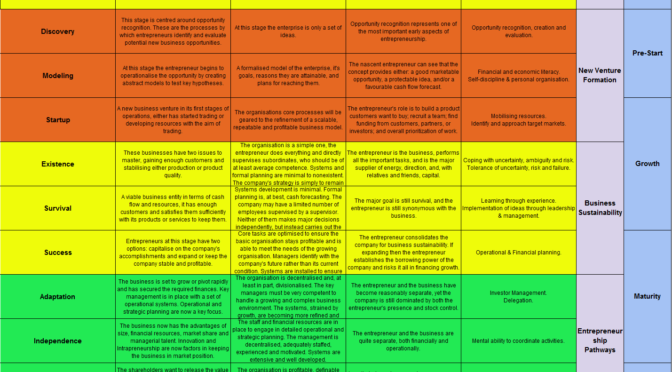
    The first three stages of the Enterprise Creation stages which emerged are: Discovery, Modeling, and Startup which form the new venture formation stages. The next three Existence , Survival and Success develop the business into a sustainable business entity. The last three stages: Adaption, Independence and Exit provide the entrepreneurship pathways for the entrepreneur.  These final elements complete the entrepreneurship model by focusing on the success of the business, how the entrepreneur progresses beyond the business, their separation into different entities and the entrepreneurs eventual exit. The 9 Stages of Enterprise Creation are set out below:

    Stage 1 – Discovery

    This first stage of the 9 Stages of Enterprise Creation  is centred around the focal competency of Opportunity recognition, creation and evaluation. These are the processes by which entrepreneurs identify and evaluate potential new business opportunities. An opportunity by definition is a favorable set of circumstances which creates a need for a new product, business, or service. Opportunity recognition is the process by which the entrepreneur comes up with a prospective idea for a new venture. Evaluating the opportunity takes research, exploration, and understanding of current needs, demands, and trends from consumers and others. The process of researching and surveying allows the product or service idea to develop, so that it can be modelled.

    Stage 2 – Modeling

    The second stage is about developing the business logic to create a business model. This is split into three parts and starts by setting out a Strategy, formulating a business model and setting the business processes to achieve the strategy . These form the key elements for the plan to start the business and, are an integral piece of submitting any proposal for an entrepreneurial or intrapreneurial business. The model should be underpinned by the resources available and those which may still need to be secured. Resource allocation and availability are extremely important to startups because sustainability and profit (not loss) depend on proper planning and understanding of the internal and external environments.

    Stage 3 – Startup

    The fourth stage is starting the enterprise. Once the resources detailed in the business plan are mobilised the entrepreneurial process can be effected and implementation can take place. In this stage the business may be trading or begin to research or develop a product. The aim of this stage is to have the processes in place so that the business can have a scalable, repeatable and profitable business focused on distinct customers within an identified market.

    Stage 4 – Existence

    At this stage the business has two core focuses; to gain enough customers to create a profitable business and, at the same time establishing production or product quality. The majority of businesses fail at this stage due, in part, to either one or both of these factors. At this stage the organisation is a simple one, the entrepreneur does everything and directly supervises subordinates, who should be of at least average competence. Systems and formal planning are minimal to nonexistent. The company’s strategy is simply to remain alive  which requires the focal competency of tolerance of uncertainty, risk and failure

    Stage 5 – Survival

    At this stage the business should be a viable entity in terms of cash flow and resources, it has enough customers and satisfies them sufficiently with its products or services to gain repeat sales. The organisation is still simple. The company may have a limited number of employees supervised by a junior manager or supervisor. Neither of them makes major decisions independently, but instead carries out the rather well-defined orders of the entrepreneur. Formal planning is, at best, cash forecasting. The major goal is still survival, and the entrepreneur is still synonymous with the business. The entrepreneur starts to implement ideas through leadership and management which provides opportunities to scale.

    Stage 6 – Success

    Entrepreneurs at this point of the 9 Stages of Enterprise Creation have a number of options: capitalise on the company’s accomplishments, expand or, keep the company stable and profitable. The entrepreneur has a number of ways to capitalise, from exit to taking a ‘founders dividend’ from the business. If the entrepreneur want to expand  then the core tasks are to make sure the basic organisation stays profitable so that it will not outrun its source of cash and, to develop managers to meet the needs of the growing organisation. Through the entrepreneurs leadership all managers within the business should now identify with the company’s future opportunities rather than its current condition demonstrating a success to its stakeholders.

    Stage 7 – Adaptation

    Businesses which reach this stage normally have a number of factors pushing them to adapt, these are normally grounded in changes either to the micro or macro environments. Businesses at this stage will normally be entering a phase of rapid change and will have to have secured the required finances to develop. At this point key management is in place with a set of operational systems. Operational and strategic planning are now a key focus. The organisation is decentralised and, at least in part, divisionalised. The key managers must be very competent to handle a growing and complex business environment. The systems, strained by growth, are becoming more refined and extensive. Both operational and strategic planning are being done and involve specific managers. The entrepreneur and the business have become reasonably separate, yet the company is still dominated by both the entrepreneur’s presence and stock control.

    Stage 8 – Independence

    A business at this stage should now has the advantages of size, financial resources, market share and managerial talent. Innovation and Intrapreneurship  are now key factors in keeping the business in market position. The organisation has the staff and financial resources to engage in detailed operational and strategic planning. The management is decentralised, adequately staffed, and experienced. Business systems are extensive and well developed. The entrepreneur and the business are quite separate, both financially and operationally.

    Stage 9 – Exit

    The last of the Enterprise Creation stages is focused on exiting the business and making their separation permanent. An exit strategy will give the entrepreneur a way to reduce or eliminate their stake in the business and, if the business is successful, make a substantial profit. This stage removes the entrepreneur from primary ownership and decision-making structure of the business. Common types of exit strategies include Initial Public Offerings (IPO), strategic acquisitions and management buyouts. The organisation at this stage is generally profitable, has a definable set of resources with a clear and realistic strategy to continue. The CEO and founder(s) are separate.


    9 stages of Enterprise Creation
    9 stages of Enterprise Creation

    The full paper which develops the 9 Stages of Enterprise Creation:  Bozward, David and Rogers-Draycott, Matthew Charles (2017) Developing a Staged Competency Based Approach to Enterprise Creation. Proceedings of the International Conference for Entrepreneurship, Innovation and Regional Development. ISSN 2411-5320, can be found at http://eprints.worc.ac.uk/5377/

    A textbook that supports learning with multiple case studies is available on Amazon.

  • Amazing Entrepreneurs we have forgotten

    Amazing Entrepreneurs we have forgotten

    Sometimes we forget that we humans just continue to do the same thing over and over again. The old adage “Nothing is new under the sun” always comes to mind. So every now and again I need just to remind myself of this fact that there are Amazing Entrepreneurs we have forgotten.

    Even with the internet, fastest ever broadband, mobile phones and instant everything, there are many before us who just; firstly made this possible for us and secondly also had it all.

    Lets look at five I admire.

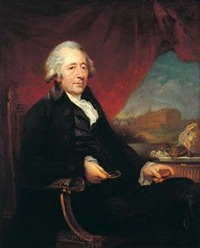
    Matthew Boulton, Entrepreneurial Manufacturer

    Born: 3 September 1728

    Birth Place: Birmingham, West Midlands UK

    Industry: Entrepreneurial Manufacturer

    Matthew Boulton Carl Frederik von Breda 30 Most Influential Entrepreneurs Of All Time


    Website: www.matthewboulton2009.org

    Wiki: https://en.wikipedia.org/wiki/Matthew_Boulton


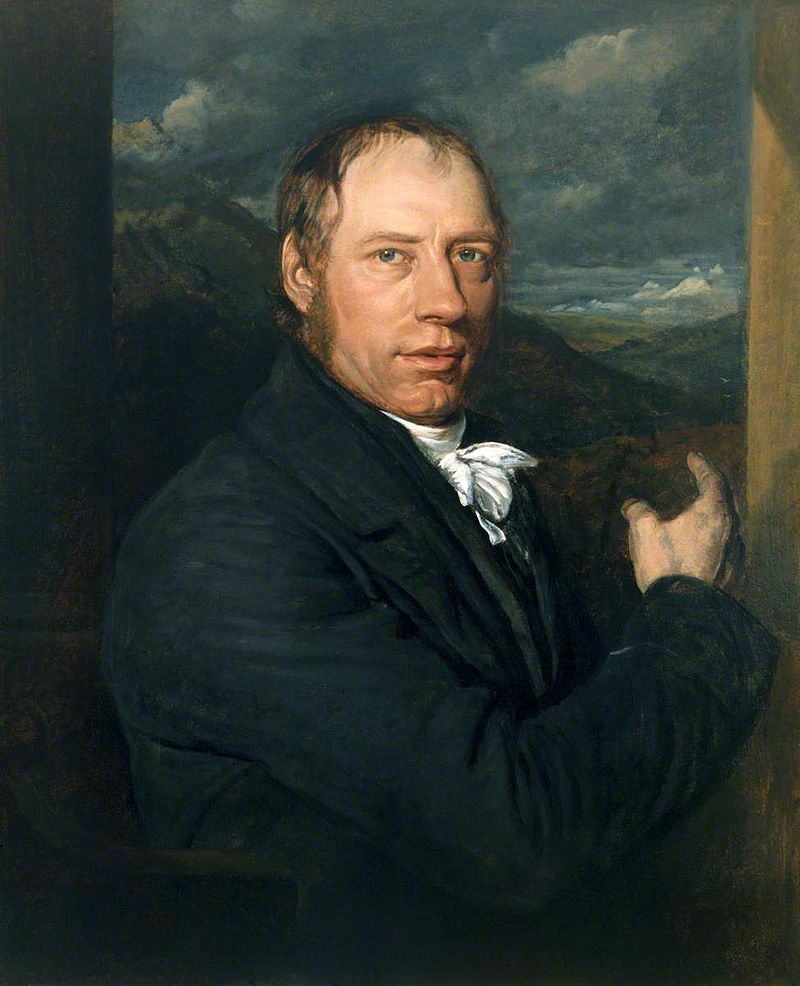
    Richard Trevithick, Steam Engine

    Born: 13 April 1771

    Birth Place: Tregajorran, Cornwall, England

    Industry: Inventor, mining engineer

    Influence: Pioneered Steam Engine


    Website: https://en.wikipedia.org/wiki/Richard_Trevithick


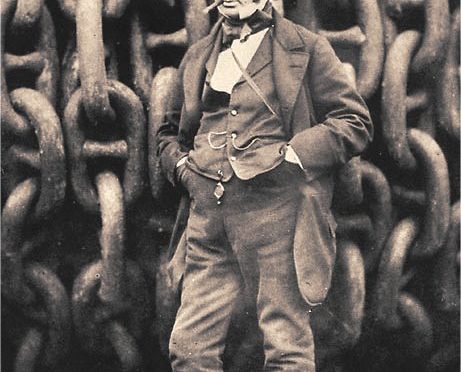
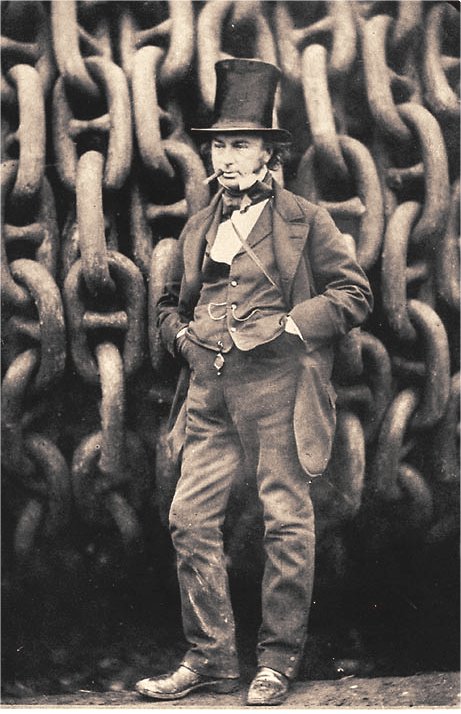
    Isambard Kingdom Brunel,

    Entrepreneurial Engineer

    Born: 9 April 1806

    Birth Place: Portsmouth, UK

    Industry: Civil & Structural Engineering

    Website: https://en.wikipedia.org/wiki/Isambard_Kingdom_Brunel


    Andrew Carnegie

    andrew carnegie 30 Most Influential Entrepreneurs Of All Time Born: 25th November, 1835

    Birth Place: Dunfermline, Fife, Scotland, UK

    Industry: Steel Tycoon

    Influence: Pioneered many manufacturing processes.

    Website: www.carnegiescience.edu


    Anita Roddick

    Anita Roddick 30 Most Influential Entrepreneurs Of All Time Born: 23 October 1942

    Birth Place: Littlehampton, UK

    Industry: cosmetics

    Influence: Green Product Pioneer.

    Website: www.AnitaRoddick.com


    So today spend some time thinking about these amazing Entrepreneurs we have forgotten and how people still have the same needs, wants and needs for us Entrepreneurs to make or sell them products and services.

  • Do you know your Exit Strategy?

    Do you know your Exit Strategy?

    You will need to ensure you are motivated to exit the business and that means understand the path for your exit strategy. In every sense you must learn from the exit from your business and the experience should motivate you to build a new enterprise which is more amazing and motivated that this. The five common Exit Strategies are:

    Initial Public Offering

    The stock market offers you the opportunity to increase the capital available to the business, the money invested and also the rewards available to you. The motivation for being independent will have to reduce as shareholders and accountability move into play.

    Acquisition

    When you have created a truly unique, thriving and attractive business, it will be becoming an appealing proposition for other businesses. When they offer you the large sum of money for your business, what motivates you to say ‘Yes’? What will you do everyday when you no longer have your business to run? The opportunities are then truly amazing and you can become a member of ‘Serial Entrepreneurs’ club.

    Liquidation

    Walking along any footpath can be uneasy and the same is true about business. The vast majority of entrepreneurs have a company liquidation in there bag, an experience they will never forget, an event which created some the best lessons they have ever learnt. No expects you to walk straight away, so why do you expect to be able to manage a business from day one without making mistakes. This should be expected, however it is in the learning about business, enterprise and yourself which you can create a truly amazing and vibrant business next time around.

    Sell to another Entrepreneur

    One of my favour saying is that “People buy from people who are like them”. This is the case from buying your newspaper to buying a company. Entrepreneurs look for opportunities and therefore within your network you will know people who want to buy and run your company better and pay you for the chance.

    Shareholder

    This option which many entrepreneurs follow is to become a shareholder which then provides revenue for the rest of their lives (e.g. Bill Gates). In some cases the shareholder provides revenue for many generations to come, such as the Guinness family. This exit requires you to create a good team around you who are motivated to continue to move the business forward.

    So before you start out on your venture, think about your exit strategy and  what you will need the business to look like for you to achieve your goal.


  • The five types of student entrepreneur

    The five types of student entrepreneur

    After working with over 20,000 students in the last ten years, I have started to stereotype those coming through into five simple student entrepreneur categories. There is no real theory and a great amount of research here, but I just wanted to share my thoughts and observations on these student entrepreneurs.

    Wanta-preneur

    This group of people want to mega rich, famous and of course a owner of a super big business. They just want it all! Yet hard work, planning and dedication to entrepreneurship is not at the core of their motivations. They sometimes do start businesses, normally with co-founders who do all the work, while they talk about their business, the people they know and the mega plans they have.

    Pros : Great talker who other may believe
    Cons : Lacks hard work and dedication

    Business-Anarchistic-preneur

    Staying the same is not an option, so these people think of distributive technology, business models and taking all the biggest businesses, traditional methods and societies. They know that they will succeed as its only there ability to change the world that will save it.

    Pros : Out of the box thinking
    Cons : Others don’t take them seriously, just too radical

    Social Entrepreneur

    This group not only want to start a business but one that helps others. They have great amounts of passion, dedication and drive to see this business idea into a fully developed business. These people understand the need to develop others, work in teams and share the value of their business with as many people as possible.

    Pros : A Team player
    Cons : Takes too long as brings too many people with them

    Geek-preneur

    The richest people are Geeks, so why not start the the next Microsoft, Apple or Facebook. These people can make technology work for them and create small dynamic businesses which engage users throughout the world in their dream creation.

    Pros : Easy to start boot strapped business
    Cons : Lacks people skills to engage others

    Just-do-It-preneur

    This group just get on with it, never thinking for one moment they can’t. What they lack in skills, knowledge and network, they balance with the shear determination and brut force. They are the bull in the china shop style of entrepreneurship.

    Pros : Self belief and determination to make it a success
    Cons : Lacks style and skills which makes others believe

    As with all people and businesses it about having the team, a set of skills and maybe every business should have a mix of these.


    So which type of student entrepreneur are you?

  • The process of developing a business plan

    The process of developing a business plan

    When I look at the process of creating a new venture, I often see people forget some of the basic elements in the process of developing a business plan.

    The first three steps are:

    1. Opportunity discovery,
    2. Business modelling
    3. Business planning


    Opportunity Discovery

    The best idea is the one which provides the best business opportunity. Therefore we are not looking for any idea but an idea which provides the best opportunity.

    Therefore the process of ideation captures the current industry trends and the competitor in and around them. The technology innovation currently applied to this market and the outlook we see in terms of costs and market adoption trends.

    The creative problem solving can not sit in isolation and needs to be surrounded by the context for it to be applied to create an outstanding  value proposition later on.

    Business Modelling

    For most people this is filling out the Business Model Canvas, a tools which provides a powerful view of the business model. But again this is completed in isolation within a full understanding the ecosystem, actors and their behaviours.

    The process of modelling is about understanding the relationship between the key actors within the ecosystem, it doesn’t matter if its designing a new road bridge, a tv or a new products. This dynamic relationship is so important in understanding the processes and metrics to be put in place to plan the business.

    Business Planning

    The core aspects of Business Planning are risk analysis, scenario planning and financial planning. Once these are done the rest, include product design, marketing strategy and operations are secondary.

    All investors want to know you can manage this risk and act accordingly.

    The process of developing a business plan are about understanding the dynamic relationship and how to mitigate the risks they pose to your business. Its not an exercise in writing or filling out the right amount of words in the right sections.


    The process of developing a business plan is simple yet so many people get it wrong. Just remember to understand the dynamic nature of business and that your business startup will be connected with these and therefore needs to adjust to maintain a successful course through the early years.

  • Developing a business process diagram for your startup

    Developing a business process diagram for your startup

    As a entrepreneur, you can have a lifestyle of freedom and flexibility not offered to an employee. However, being a owner of a small business also carries greater responsibility with many more tasks to juggle. This means you need to understand the tasks required by everyone around.

    Entrepreneur

    • Planning and Strategy – You are the principal strategist and planner.
    • Finance and Accounting – Depending on the business, some owners can bootstrap and start with a smaller budget, but either way you’ll also need to set up and maintain business bank accounts, payment processing, accounts payable and accounts receivable, and taxes.
    • Legal – From forming a limited liability company to creating legal contracts. You might need to write, review and sign legal contracts and sales agreements.
    • Marketing and Sales – No matter how good your product or service is, you need marketing and sales to drive business. Depending on the business, you could be doing print advertising, public relations, online marketing, networking, cold calling and managing commissioned salespeople.
    • Customer Service – In the beginning, most entrepreneurs are responsible for conducting all of the customer service duties. These include phone calls, email messages and follow-ups concerning product delivery and quality issues.
    • Human Resources – As a small business grows, so do its hiring needs to accommodate more orders and faster growth. The entrepreneur  needs to identify human resources needs, write job descriptions, screen and interview candidates, train, manage and pay employees.

    Customers

    Nurturing relationships with your customers is a crucial part of growing a startup business. In this age of ecommerce and technology innovation, caring for your customers has never been more important.

    The easiest way to get, keep and get your loyal customer to promote your business is to:

    Interact with your customers

    Here are some simple lessons:

    • Keeping your patience is key to giving your customer the time to air out their issue.
    • Do everything in your power to provide excellent service to your customers on an ongoing basis.
    • it’s important to truly listen
    • Treat a Customer Like a Valued Partner
    • Build Trust by alerting your customers to Large Scale Changes, Good or Bad
    • Being transparent in the digital age is a must.
    • No matter the circumstance, the customer is always right.

    Business operations

    This is the core of the business, it handles everything. If you can understand what this does and how it does it, to provide an excellent customer experience each time within budget, your business has the best opportunity for success. Don’t leave any stone unturned in making your operation understandable by ALL stakeholders in the business, staff, shareholders and most importantly your customers.

    business process diagram for your startup
    business process diagram for your startup

    Financial

    Financial planning and cash management is fundamental to a startup.  Perhaps the most challenging part of building a startup is forecasting revenue targets. You can take one of two approaches; a top down and bottom up approach.

    • The top down approach involves identifying comparable companies to yours that have grown to be successful and modeling your revenue growth curve similar to these companies.
    • The bottom up approach makes use of your market research to look at how many customers you can reach, the number you can persuade to work with you and how many you can capture as paying customers.

    The final step in your financial plan is to develop your cash flows. Revenue minus cost of goods provides positive cash and operating expenses and capital expenses (purchase of assets) use up cash. Every startup must have a good view on how much cash they will need to get through each phase of the business.

  • 5 places to run your startup business, on the cheap

    What places to run your startup business?

    When starting out, you only seem to have costs and they keep coming in. The five set of fees are:

    1. Office space
    2. Utilities
    3. Incorporating and legal fees
    4. Accounting costs for the first year in business
    5. Payroll for employees

    So one of the main costs is office space and if we can reduce that we can survive for longer and hopefully last until we start making more money than we spend.

    1. Run your startup business from home. This won’t work for every business, but if it will work for yours it can save you a pile of cash on utilities and rent.
    2. Coffee Shop’s are happy to have you and have good wifi. You also get to meet like minded people and can invite people for meetings in the coffee shop.
    3.  Look out for a business incubator which helps startups by providing them space, mentors and events. These are normally free for a set period.
    4. Spare desk in someone else’s office. A lot of businesses have space and if you can use one or two desks in return for some form of payment, even your manpower it will be cheaper and more flexible.
    5. Find a co-working space where you can rent space as-needed for much less than the cost of a traditional commercial office which is normally looking for 3-5 years.

    Just remember when looking for office space its “Location, location, location.” , which drives home just how important location is when choosing a space for your startup business.

  • Entrepreneurship as a career choice – Millennial Entrepreneurs

    Entrepreneurship as a career choice – Millennial Entrepreneurs

    The Millennials are making the career choice of being an entrepreneur.

    Promoting entrepreneurship as a viable career option and supporting self-employment on an higher educational campus has both community and economic relevance. The role of higher educational campuses to nurture and develop the entrepreneurial and innovative talent is foundation to creating the next generation within our community. The trend is for millennial University students to be empowered to come out of university with an understanding of entrepreneurship, with a view that these skills and knowledge allow them to make informed life choices.

    Millennial Entrepreneurs

    Our Millennial Entrepreneurs understand how to start new businesses and take on the risk and rewards of being an founder.  Entrepreneurs are the dreamers who are fuelled by the desire to pioneer, lead, innovate and invent disruptive technologies and products. The tech savvy millennial wants to work the way then want, the hours they want make the opportunities they want.

    In the 1980s we saw a massive increase in self employed and now their children are following the footsteps or the desire of their parents and opted for a career that was decided by their elders. However, the opening up of the world economy during the 1990’s and the great advances in tech field has had far reaching impact on the way business was done world over.

    Millennial Entrepreneurs Motivation

    These momentous changes are opening up new business creation tools and unexplored business models for the young and ambitious who were not satisfied being put in a single career for their entire life. Young people are drawn towards entrepreneurship because:

    1. The desire to be their own boss and have better control
    2. The motivation to take risks in the changed global environment where unexplored new opportunities were present
    3. The ambition to develop and execute a plan right from the ground level
    4. The aim to do well financially and take their growth trajectory to unprecedented level

    New Venture Creation (NVC) Programmes are available to equip nascent entrepreneurs with the skills necessary to start a scalable business.  These university degrees have been developed by entrepreneurs to support Millennial Entrepreneurs on the entrepreneurial journey, and to develop the entrepreneur within  alongside an in-depth understanding of how to start and run a business.

    Students will be in a class with like-minded Millennial Entrepreneurs developing a strong network of entrepreneurs. Throughout the  degree, the focus will progressively move from entrepreneurial mindset, creativity, venture feasibility and marketing, to business operations, stakeholder communications, sales and growth strategies.

  • 6 ways to find a co-founder

    6 ways to find a co-founder

    Co-founders are normally people involved in the initial launch of startup companies. Anyone can be a co-founder, but frequently co-founders are entrepreneurs, engineers, hackers, funders, web developers, web designers and others involved in the ground level of a new  venture.   The first step in finding your co-founder is to map yours needs.  Make sure you are perfectly clear on what skillsets/resources will be the most important for the success of the startup, and best fill a hole in your own resume and desired management team.

      1. Friends from University – It worked for the guys at Facebook and Google, so just get out and meet other students.
      2. Former co-workers – If you’ve worked together as employees, you might be able to work together as co-founders. You have the history and know each others skill sets.
      3. People you meet over coffee – We see hot beds of startups co-locating themselves in coffee shops, just talk to the guy next to you.
      4. Former co-founders in another venture – There’s no better person to launch with than someone that has started a company before.
      5. Accelerators – Related to some of the other co-working suggestions, simply applying to a startup accelerator can lead to finding a co-founder.
      6. At meet-ups – Tech Meetups are great places to find co-founders and they are easy to find and also go to.